Built by someone who would rather say “I don’t know”.
Cogged is a product of No Fear Tech Ltd, a company registered in England. It exists because the most confident voice in car repair is very often the least reliable one.
Kevin Mackay
I’m 54. I grew up in London and I live near Norwich now. For the last three years I drove lorries — general haulage — and I handed my notice in this July to build this full time. At my age that is either the right decision or an expensive way to find out.
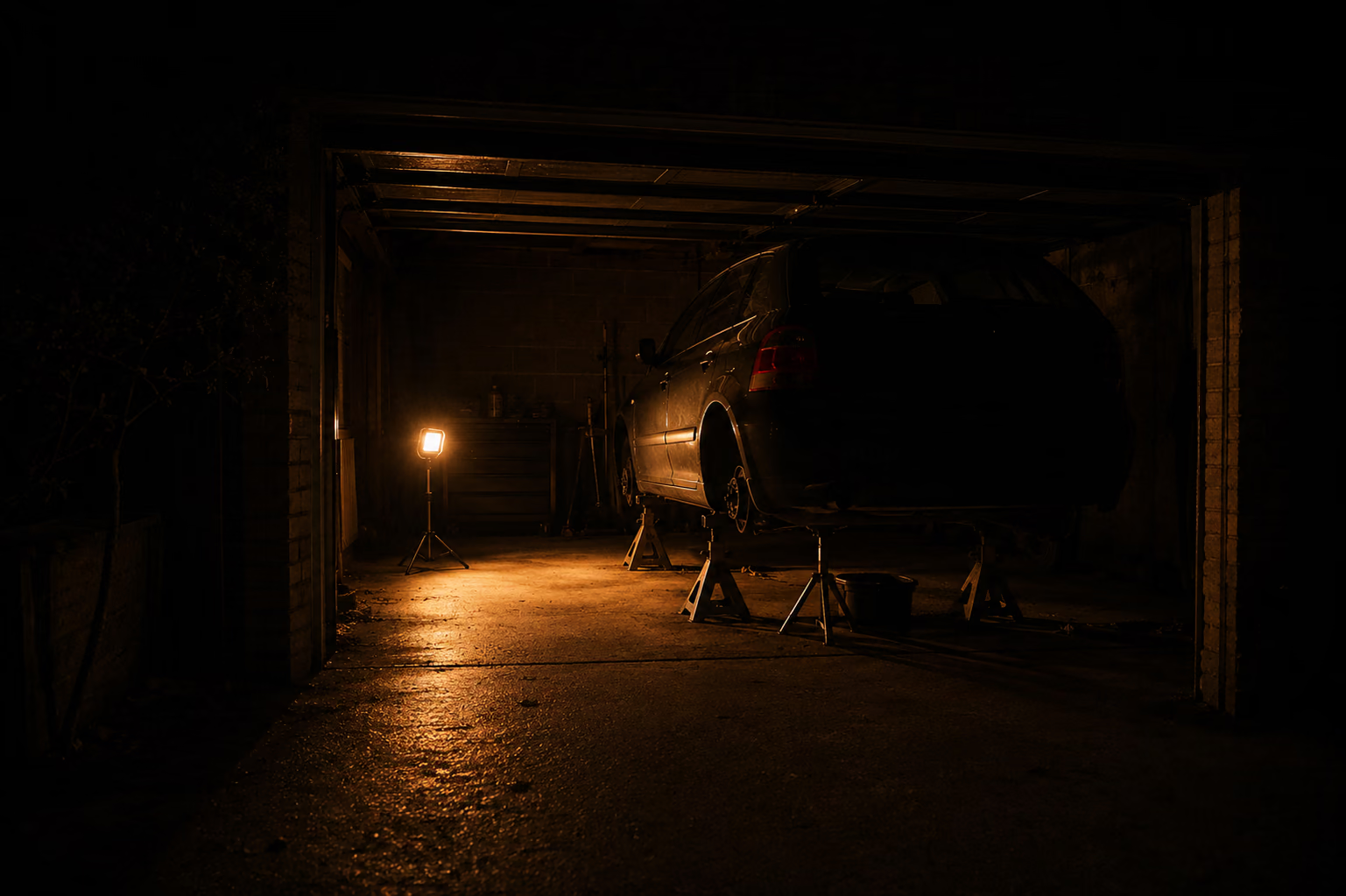
Cogged started on my own drive, with a Jaguar XE and a job I was partway through. I needed one number. I ended up wiping my hands on a rag to unlock a phone and scroll a forum thread arguing about it — three answers, no sources, and not one of them from anybody who had ever seen my engine.
What got me was not that the information was hard to find. It is everywhere. It was that there was no way to tell the reliable answer from the confident one — and the moment you most need to tell the difference is the moment your hands are full, you are down on cold concrete, and the light is going.
So Cogged is not me trying to build an AI that knows about cars. It is me trying to build the thing I wanted on the drive that afternoon: something that gives you the figure, tells you where it got it, and has the honesty to say when it hasn’t got one.
Why the refusing part matters to me. Anybody can ship something that always has an answer. Cogged is built for the person I actually am — somebody working on his own car at the weekend, who would much rather be told “I don’t have that figure” than be told the wrong one in a calm, confident voice. If it is good enough to trust on the XE, it is good enough to ship.
The problem is confidence, not information

There has never been more car repair information available, and it has never been harder to know which of it to trust. A forum thread gives you three torque figures and no source. A video gives you one, from someone whose car is nearly yours. An AI assistant gives you a number in a completely level voice whether it knows or is improvising, and nothing in the answer tells you which happened.
None of that matters much when the answer is which trim clip to lever first. It matters enormously when the answer holds a wheel on, seals a combustion chamber, or stops a car rolling off a jack onto somebody.
So the product is not really “an AI that knows about cars”. It is a way of getting a small number of verified facts to somebody whose hands are full, at the moment they need them, and being honest about the edges of what it has.
Four things we won’t trade away
These are written into how the software is built, not into a values page. Each one costs us something — speed, coverage, or how smooth the product feels — and each one stays anyway.
No invented numbers
Torque values, capacities, pressures, gaps and sequences come from a manual with a citation, or Cogged says it doesn't have them. There is no estimate and no family average.
The assistant never writes a step
Procedure text is held on our servers and released only once a safety gate opens. There is nothing for the assistant to let slip early, because it does not hold it.
The gate is not part of the conversation
What opens a safety gate is separate from what you are talking to, and it is judged by two independent systems. No amount of persuasion moves it, including telling it you're a professional.
A confirmation expires
Lower the car, close the app, lose signal, or leave the job sitting — every open gate closes and gets asked again. There is no partial reset.
The tempting version of this product answers everything instantly, never stops you, and covers every car on the road from day one. It would be more popular for about as long as it took to hurt somebody.
How this is meant to pay for itself
Worth being direct about, because it shapes what you can trust. Cogged earns a commission when you buy a part through a link in the app, and we disclose that at the point you see the options.
What that does not buy is placement. The parts list is ordered by what fits your car and what the job needs, not by what pays the most, and there is no version of it where a cheaper part gets described as unsafe to move you up a tier. An assistant that shades its advice toward its own margin is worth nothing to a person under a car, and it would take exactly one person noticing to end the whole thing.
Licensed technical data is the largest cost in the business, and it is a cost we take on precisely so the numbers can be real. That is the trade at the centre of the company.
Where we actually are
In development, and not available to download. The safety machinery is built and tested. The application, the voice layer and the data model all exist. What is still being assembled is the technical data behind the procedures, which is a licensing question rather than an engineering one.
We are building the procedure library in the order people ask for jobs, so if you tell us what is sitting on your drive, it genuinely affects what gets done next.